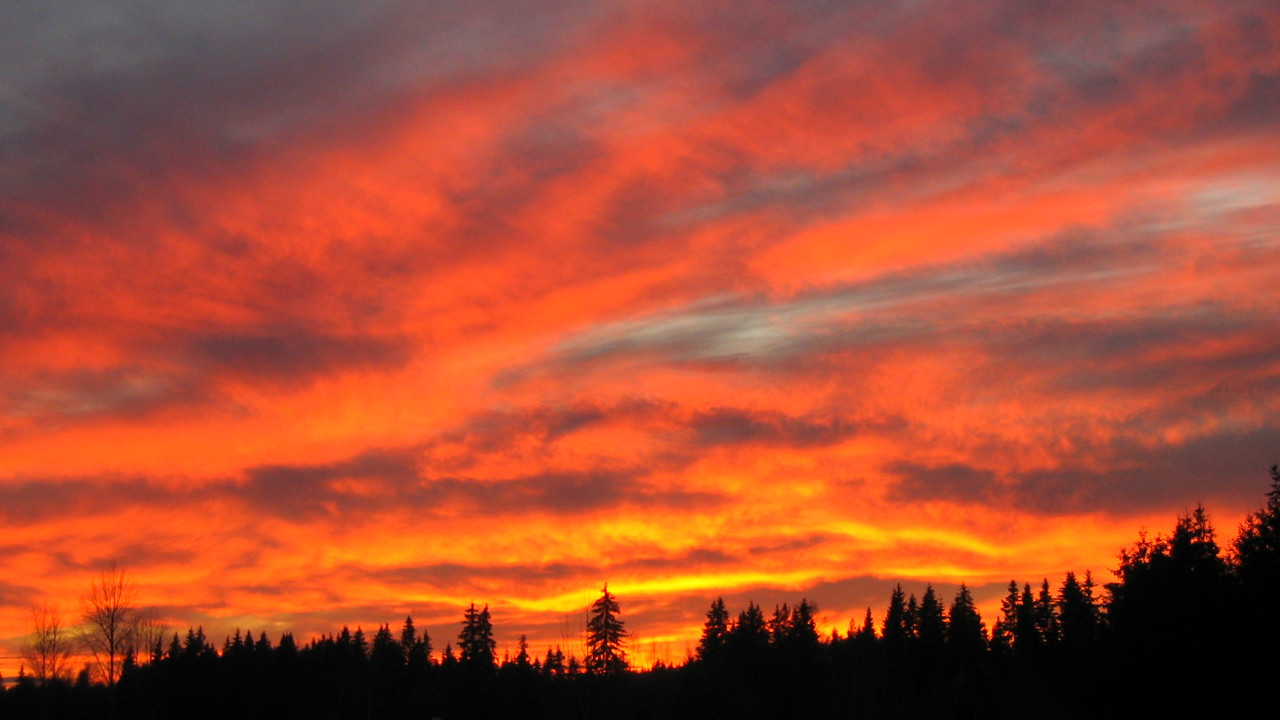
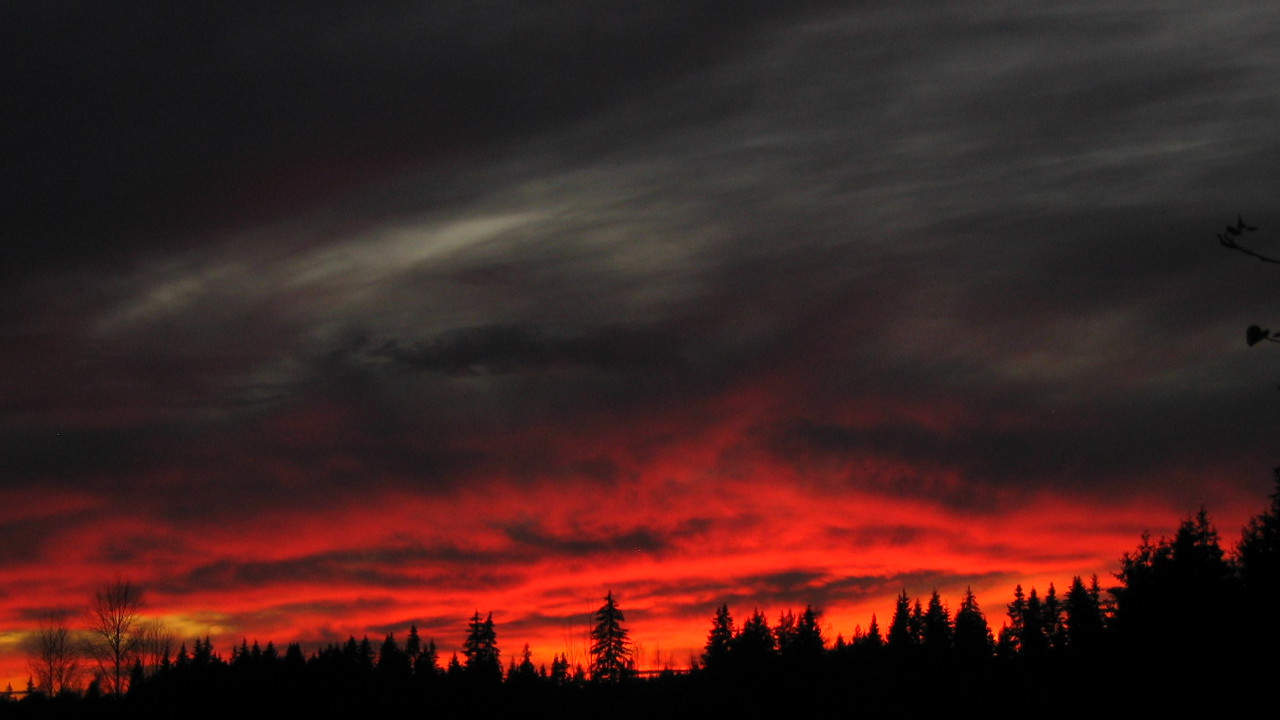
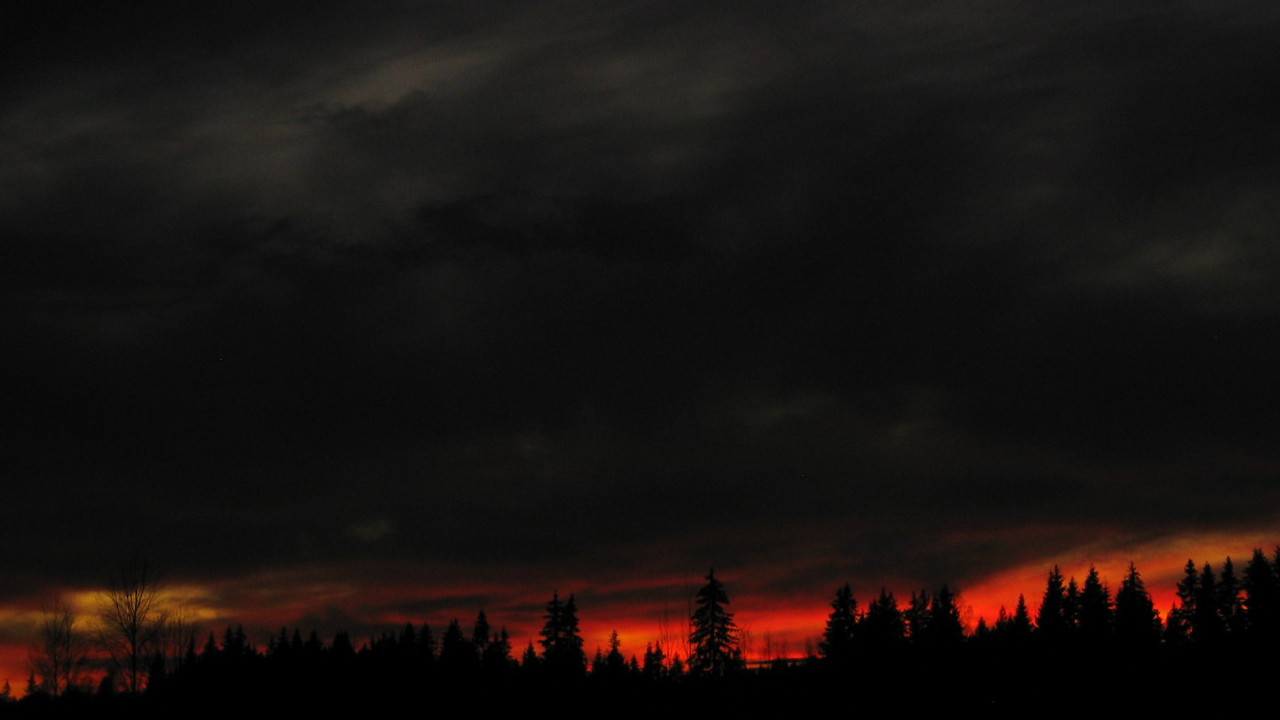
Time DependenceFundamentally a sunset is a transient phenomenon - the Sun does not remain low in the sky but continues to sink below the horizon. As a result, illumination changes all the time, and as the path through the atmosphere changes, so do colors.At the same time, clouds move and evolve, especially when the wind is strong. This, too, can change the visible scene quite a bit. How quickly does the Sun sink? That depends on latitude and season. The angle under which the path of the sun in the sky hits the horizon is steeper at the equator than in high latitudes - an equatorial sunset can be over within few minutes and darkness comes quickly, up in Finland the same might last half an hour and near the poles there is low light for days and days. Here is a time series in which many different elements are seen - note how colors change from yellow-golden to red as the path of the illumination ray through the atmosphere grows, how the relief illumination of the cloud layer changes with illumination angle and how the clouds move towards the viewer.
A red-orange scene with full illumination of the cloud layer from below.
A few minutes later the colors move more towards red and the shaded bands in the layer grow.
Again a few minutes later, the deep red illumination moves towards the horizon and more and more of the cloud layer lies in shadow.
Finally the whole cloud layer is dark and only the horizon haze glows in bright colors. Back to main index Back to science Back to sunsets Created by Thorsten Renk 2022 - see the disclaimer, privacy statement and contact information. |